
23 December 1588, eight in the morning. At the château of Blois, the king’s council has been sitting since dawn. Word is brought to the Duke of Guise that His Majesty awaits him in the old cabinet. The way leads through the king’s chamber. Eight men of Henri III’s personal guard are waiting there, swords under their cloaks. The most powerful lord in France dies at the foot of the royal bed, on Christmas Eve.
What to see in Blois? This, first of all: the very rooms where the kingdom tipped over. Then a courtyard, a single one, from which you take in four centuries of architecture without moving a step. Blois is the easiest château in the Loire Valley to understand, and the only one standing in the middle of a town, twenty minutes from Cour-Cheverny.
One courtyard, four centuries
Stand in the centre of the courtyard and turn slowly. The Estates Hall, with its twin naves, is what remains of the palace of the Counts of Blois, built in the thirteenth century. The Louis XII wing, red brick and white stone, still belongs to the Gothic world when it is completed around 1500. The François I wing, raised between 1515 and 1519, brings the Italian Renaissance into France: an octagonal staircase set proud of the façade, crowned salamanders on the walls. The Gaston d’Orléans wing, finally, designed by François Mansart around 1638, already announces the classicism of Versailles. Four building sites, four centuries, one courtyard.
Seven kings and ten queens of France lived here. No other Loire château can say as much, not even Chambord, a residence for passing through rather than a home. It was from Blois, too, that Joan of Arc set out for Orléans in April 1429, after having her standard blessed there.
The chamber where the kingdom tipped over
Back to 23 December 1588. Henri III has summoned the Estates General to Blois; the Duke of Guise, idol of Paris and head of the Catholic League, behaves there as master of the kingdom. The king settles the matter in his own way. The day after the murder, the duke’s brother, the Cardinal of Guise, is killed in his turn. Catherine de’ Medici, who had spent her life preventing precisely this, dies at the château two weeks later, on 5 January 1589. Eight months on, Henri III falls to a monk’s knife. In a single season, Blois watched the Guise and the Valois go out.
The second floor of the François I wing tells that day room by room, with plans and portraits in support. You walk through it slowly, and you understand why historians still argue about it.
Catherine’s cabinet, or the legend of the poisons
On the first floor, Catherine de’ Medici’s studiolo lines its carved wooden panels from floor to ceiling. Some of them open when you press a pedal hidden in the skirting board. Poison cupboards, tradition insists, where the queen mother kept her Florentine phials.
The tradition has an author: Alexandre Dumas, who installed the poisons in La Reine Margot, in 1845. The inventories of the period speak instead of jewels, papers and precious objects, which is what hidden cupboards held in every great house of the age. Dumas wrote novels, the archives keep accounts. The latter are less entertaining, and more reliable.
What to see in Blois in one day
The château takes two hours to visit, royal apartments, Estates Hall and Fine Arts Museum included, the latter housed in the Louis XII wing and covered by the ticket. The HistoPad, an augmented-reality tablet offered at the entrance, rebuilds the vanished interiors room after room: children master it faster than their parents.
Keep the rest of the day for the town, which climbs from the Loire up to the château through a web of staircases and lanes. The monumental Denis-Papin staircase and its long view down the axis of the town, Saint-Louis cathedral, the bishop’s palace gardens hanging above the river, with the view over the Jacques-Gabriel bridge, the church of Saint-Nicolas between château and Loire, the half-timbered houses of the old town. Everything is done on foot, at a stroll.
Opposite, the House of Magic
The château square has a second star. Jean-Eugène Robert-Houdin was born in Blois in 1805, a clockmaker by training, and invented more or less everything modern magic takes for granted: the show in evening dress, the automata, illusion as a drawing-room art. A young American named Erich Weiss would later choose a stage name in his honour: Houdini.
The House of Magic, dedicated to him, stands on the other side of the square. A six-headed dragon unfolds from its windows at set times, and magic shows punctuate the day, included in the ticket. It opens from April to the end of August, 10 am to 12.30 pm and 2 pm to 6.30 pm. Combined tickets with the château are sold at the ticket office.
In the evening, the courtyard lights up
From 4 April to 26 September, then during the autumn half-term holidays, the sound and light show Ainsi Blois vous est conté projects the château’s history onto the façades of the courtyard. Forty-five minutes, at 10 pm in April and September, 10.30 pm from May to August, 7.15 pm in late October. Adults €13, reduced rate €11, €8 for ages 6 to 17.
2026 opening times and prices
The château is open every day of the year. The ticket office closes thirty minutes earlier.
| Period | Opening times |
|---|---|
| January and February | 10 am to 5 pm |
| March | 10 am to 5.30 pm |
| 1 April to 30 September | 9 am to 6.30 pm |
| 1 to 16 October | 9 am to 6 pm |
| 17 October to 1 November | 9 am to 6.30 pm |
| 2 November to 18 December | 10 am to 5 pm |
| 19 December to 3 January | 10 am to 6 pm |
| Château ticket | Price |
|---|---|
| Adult | €16 |
| Reduced rate | €12 |
| Ages 6 to 17 | €8 |
| Under 6 | free |
The reduced rate applies to students, jobseekers, large families and teachers. Visitors with disabilities enter free of charge, with their companion. The sound and light show and the House of Magic have their own tickets and combined formulas, for two or three sites: ask at the ticket office, the saving is real.
Getting there
Twenty minutes by car from Cour-Cheverny, crossing the Sologne on its small roads. By train, Blois-Chambord station is 1h40 from Paris-Austerlitz, and the château a ten-minute walk from the station. Come at opening time or in the late afternoon: in between, the groups hold the courtyard.
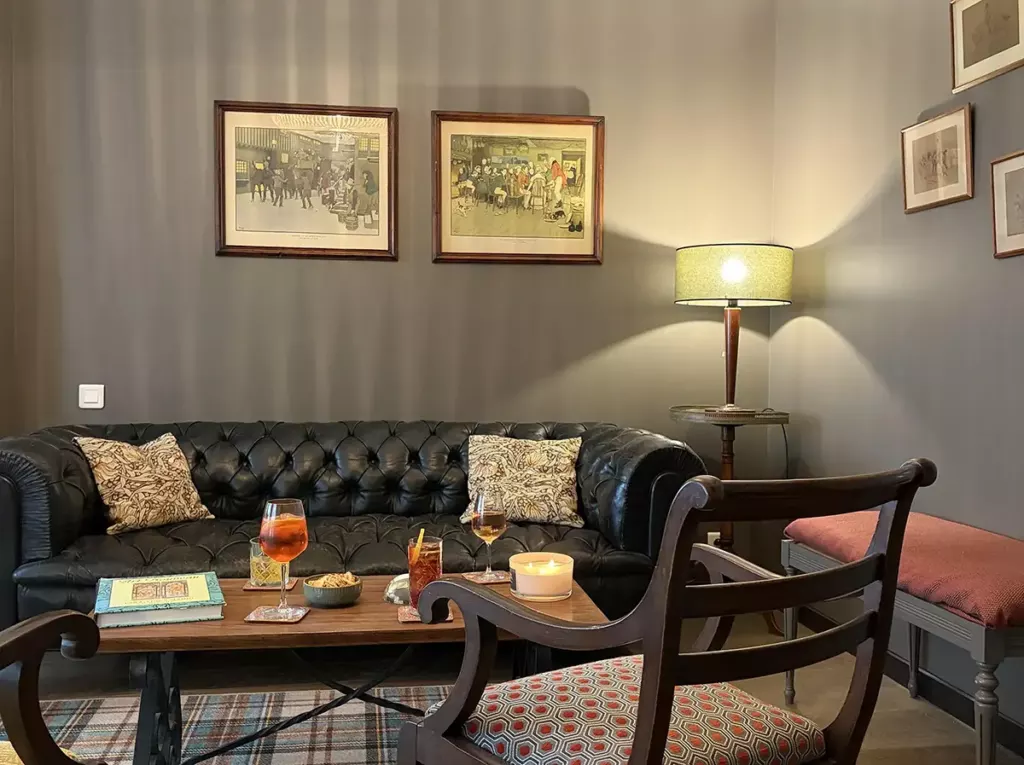
Visit the château in the afternoon, dine in the old town, stay for the sound and light show, then drive home to sleep in the quiet: that is the rhythm made possible by our house in Cour-Cheverny, twenty minutes from the château that changes century as you cross the courtyard…
Information checked on 23 August 2026 with the Royal Château of Blois and the Val de Loire tourist board. Opening times and prices change: a glance at chateaudeblois.fr before you set off.